Showing posts with label inspirational. Show all posts

Wednesday, January 09, 2019

New Year Resolution 2018: 7 out of 12

Not bad! 7 out of 12, that's more than half, clearly.

With my goal of getting to know my city, Sevilla, better, in early 2018, I set out to discover something every month (ok, along the way, it was extended to be Andalucia or even Spain...). It could be anything, but nothing that I had already done once. And it would need to consist of a visit, a discovery, or "something",  and it be followed-up, or could be preceded to, by some research into the topic.

So, out of 12 months, I was able to deliver 7 posts. For the remaining 6, for many of them, I had done either one or the other thing - in addition to some months where I miserably failed.... "nothing to see here, folks..."

Topics that will get coverage one day, just missing the final, eeh, proof-reading and referenes....
  • the overly borroc Iglesia de San Luis de los Franceses
  • La Teide in Teneriffe
  • http://www.museodecarruajes.es/, not only for the old carriages, but acutally for the history of the building which was the monesty of the monks who always had herbs to cure the poor, hence the name of the area, Los Remedios  (En el año 1526 existió una pequeña ermita en honor de la Virgen de los Remedios a la que los marineros saludaban desde el río...En notre dia,
    EL EXCONVENTO DE LOS REMEDIOS es
    el  Museo De Carruajes de Sevilla, cerca de la Plaza del Cuba.)
  • Possibly the outlet store of La Cartuja or El Gordo (for which I have bought a desim twice now...)
So, 4 unfinnished topics plus 7, that leaves really just one month out. I'd call it a succecss! I bet I cannot continue keeping the same pace this year - could I ever? (was that a challenge - really??)

  • Anecdote: I should actually write a proper post of the first (and the last) vegeterian monjas in Triana: http://www.minimas.org/conventos.aspx?c=8&t=1&id=46 

Monday, January 09, 2017

Suomenhevosten historiaa ja vähän sukuhistoriaakin

Vaikka suomenhevosen kantakirja on perustettu vasta vuonna 1907, hevosten systemaattista jalostustoimintaa on harjoitettu iät ja aja, Suomessakin.
Ensimmäinen nimellä tunnettu valokuva suomalaisesta hevosesta
(Jaakko Tt 118, kuva 1882 Moskovassa)

Vanhempieni muuton yhteydessä selailin vanhoja valokuva-albumeita, jotka olivat kulkeutuneet äidilleni erinäisten sukulaisten kuoleman jälkeen, ja rupesin pohtimaan, että minkähänlaisia hevosia se iso-vaari oli oikeasti kasvattanut?

Henkilönä tämä kyseinen Leander Tiihonen (1848-1907) Rautalammilta oli jäänyt minulle hyvin kaukaiseksi. Oma vaarini, siis yksi hänen lapsistaan, kuoli kun olin vielä aika pieni, joten en muista juurikaan mitään juttuja, ainakaan hevosiin liittyviä, joita iso-vaarista olisi kerrottu (paitsi sen, että hän olisi myynyt/lahjoittanut tsaarille hevosen, mutta tällä hetkellä en tiedä asiasta yhtään sen enempää).

Aikani googlattuani löysin kaksi hyvää lähdettä: Sukuposti.net-nimisen suomalaisen hevosalan sivuston ja Kansalliskirjaston Digitoidut aineistot, jossa on aivan valtava määrä vanhoja sanomalehtiä haettavana.

Ensimmäinen tuttavuus - tamma nimeltä Linkki

Ensimmäinen uusi "tuttavani", jonka löysin tuolta Sukuposti-sivulta, on Linkki niminen suomenhevostamma, joka on syntynyt 1887. Sen omistajaksi on merkitty "Tiihonen Leander, Rautalampi, Suomi" - bingo!

Luulen, että tämä Linkki-tamma olisi ehkä ollut yksi iso-vaarin lempihevosista, ainakin vuonna 1915 ilmestyneessä Hevoshoitolehdessä siitä oli kirjoitettu kovin kauniisti:
"Linkillään Leander ajoi kymmenkunta palkintoa, niistä monet ensipalkintoja. Linkki hoidettiin hyvin kuolemaansa asti Lender Tiihosen omistamalla Maukola-nimisellä tilalla ja jätti tamma jälkeensä sievän ryhmän kauniita ja arvokkaita varsoja, joista monet ovat tulleet palkituiksi." (Hevoshoitolehti 10/1915)

En ole päässyt käsiksi ko. Hevoshoitolehteen enkä siis tiedä, miksi tuo juttu on aikanaan kirjoitettu. Leander itsehän kuoli siis paljon aiemmin, 1907, eli olisikohan ollut kyseessä joku muistokirjoitus, tms?

Löysin kyllä sanomalehti arkistoista muutaman viittauksen Linkkiin, mutta en löytänyt mitään ensipalkintoja. Esim.
  • 1893 Keski-Suomi kirjoittaa kilpa-ajoista Rantasalmella: "...neljännen talokas Leander Tiihosen Raulammilta tamma Linkki joka juoksi radan 4 m. 3 s." (07.01.1893 Keski-Suomi no 3 ) 
  • 1894 Aura no 22 kirjoittaa ajoista Jyväskylässä: Neljännen 200 mk. Tiihosen tamma Linkki, 5,38. (Aura 22.02.1894) 
  • 1896 oli merkintä, että tamma olisi hänen ohjastamanaan tullut kolmanneksi (30.12.1896 Suomalainen no 149).  Eli tuolloin tamma olisi ollut 9 jo vuotias.
Tietojen mukaan Linkki oli hyvän kokoinen suomenhevoseksi, säkä 155 cm. Tuossa Sukuposti sivustolla myös mainitaan, että se olisi "Monen juoksijan kantaemä, nimittäin Riukon, Nopsan ym." (Pohjois-Savon tammakantakirja II).

copyright: Hevoshoitolehti 10/1915
Yksi näistä Linkin jälkeläisistä oli ori nimeltään Ilo, jonka kasvattajaksi mainitaan Tiihonen, eli aika takuuvarmasti Leander, koska emähän oli hänen.

Ilo oli syntynyt vuonna 1899. Merkinnöissä lukee, että Ilo oli myyty 1904 vuotiaana, jolloin se on saanut ensimmäisen  palkintonsa Jyväskylässä 3 vuotiaiden sarjassa. Sukuposti-sivustolla tälle oriille on merkitty paljon jälkeläisiä (55), etenkin Jyväskylän alueella. Ja siitä löytyy kuvakin, ilmeisesti silloisen omistajansa kanssa (A. B. Fagerström).


Ruununoriit

Toinen mielenkiintoinen juttu, joka liittyy niin suomenhevosten kuin iso-vaarinkin historiaan, on "ruununoriit" eli kruununsiitosorit. Wikipediassa niistä kerrotaan seuraavaa:
Suurilla nälkävuosilla 1866–1868 oli suuri vaikutus Suomen hevoskantaan. Monien kasvattajien oli myytävä parhaat oriinsa Venäjälle henkensä pitimiksi. Suuret määrät hevosia teurastettiin ruoaksi. Arvokkaiden jalostuseläinten korvaamiseksi ja hevoskannan kasvattamiseksi Suomen senaatti määräsi vuonna 1869 pahimmin kärsineet Vaasan, Hämeen ja Kuopion läänit hankkimaan sopivia oriita ja tarjoamaan niitä paikallisten tammanomistajien käyttöön.

Kipakka (s.1883)

Savo-lehdessä 17.01.1889 (nro 7, s. 2) on seuraavanlainen maininta Kuopion tammimarkkinoilta:
"Warsinaisten kilpa-ajojen jälkeen saiwat juosta näkeeksi wielä siitosoriiksi tarjotut. Niiksi ostettiin illemmalla sitten seuraawat neljä seuraawista hinnoista: Leander Tiihosen ,,Kipakka" 1,400 m:kasta, kauppias A. I. Ollikaisen ,,Pelle" 1,400 Mikasta, raatimies I. F. Malmborgein ,,Matti" 950 miksta ja maanmiljelijä I. Lagus'en ,,Pulmu" 1,100 m:ksta."

Kun katsoo tarkemmin tietoja, mitä Sukupostissa on merkitty Kipakasta, siellä näkyy merkintä "ro" ennen rekisterinumeroa. Tuo "ro" juuri tarkoittaa ruununoria. "Tt", jos nyt ihan oikein ymmärrän, tarkoitti työhevossuuntaa jalostuksessa (vaikka nykyään se on pelkkä T). Sivuilla näkyy myös, että omistaja oli Leander Tiihonen juuri tuohon 1889 vuoteen saakka.

Eli tulkintani mukaan, Leander oli kasvattanut Kipakan, jonka hän myi 6 vuotiaana Kuopion tammimarkkinoilla kruunun siitosoriksi ja hevonen sitten sijoitettiin uuteen kotiin. Kiva nähdä, että Kipakasta maksettiin hyvä hinta, ainakin verrattuna muihin, jotka myytiin samoilla markkinoilla.

Löysin Tampereen Sanomista jutun vuotta aiemmin (1888), joka mainitsee kilpa-ajoista Viitasaaren kirkonkylässä, "2:sen p. sai taloll Leander Tiihonen, Rautalampi, 4 m. 16,/2 s.”. Löysin myös maininnan, että tuo palkinto tuli juuri Kipakalla (28.01.1888 Keski-Suomi no 8). Tuossa jälkimmäisessä on myös hauska kuvaus kila-ajosportista:
"Katsojia oli kokoontunut radan ympärille joukottain ja näyttiwät he uteliaisuudella seuraaman jokaisen helvosen juoksua, Kilpa-ajosportti onkin saawuttanut paljon harrastajia Keski-Suomen miehissä. Tämän talvisissa waltion kilpa-ajoissa taas warmaankin moni heistä nopeakulkusella hewosellaan woittaa kunniaa ja rahaa.”
"Rata oli epätasainen, paikoin wettäkin, ilma riewuinen ja lämmin, joista syistä näin huonot tulokset. Tämä oli ensimmäinen kilpa-ajo meillä sitten wuoden 1881. Rahaa jäi kassaan 90 m. ensi wuodeksi, jolloin toiwokaamme parempaa tulosta.” 

Polle (s.1902)

Toinen kruununsiitosori, joka liittyi iso-vaariin, on Polle, joka sijoitettiin Leander Tiihosen tilalle vuonna 1907. Uutisen ilmestyi Uusi Suometar-nimisessä lehdessä 26.06.1907 ja se kertoo Kuopiossa tapahtuneista Waltion ravikilpailuista seuraavanlaisesti:
Ruunnnoriiksi ostettiin waltion kilpa-ajojen aikana Kuopiossa maanwilj. Pekka Jalkaselta, Rautalammilta, ori "Polle" 1,800 markan hinnalla ja sijoitettiin maanwilj. Leander Tiihoselle, Rautalammilla. 

Pollen tarina liene jatkui, mutta Leander itse kuoli muutamia kuukausia myöhemmin. Siitäkin kirjoitettiin Savon Työmiehessä (09.11.1907), jossa oli juttu, että Rautalammin kihlakunnan lautamies (siis Leander) kuoli sydänhalvaukseen lähes kuudenkymmenen vuoden vanhana. Jutussa mainitaan myös, että hän kuoli pitäessään puhetta tilaisuudessa
Leander Tiihosen puhetta pitäessä sapuikin tuonen kowa koura, joka kaatoi maahan ja vei hengen heti

Muutamia muita hevosia mainittu lehdissä

punainen ori

Keski-Suomi: 21.01.1880: merkintä osallistumisesta kilpa-ajoihin Kuopiossa “talokas Leander Tiihonen Rautalammilta, punainen ori, 5 w., 10 k. (juoksi hywästi, waan ajoi kumoon kilpailussa)”. En löytänyt mitään muita tietoja, mistä hevosen nimi olisi tullut ilmi. Tämä muuten taisi olla ensimmäisiä ilmoituksia kilpa-ajoista, joihin iso-vaari osallistui. Mitä lie tehnyt sitä ennen?

Jutussa myös mainitaan kuinka korkeatasoiset ravit olivat:
Yleensä onnistuimat kilpa-ajot niin hywästi, että niiden wertaa tuskin milloinkaan on täällä nähty. Myöskin oliwat hewoset nyt paljon paremmin hoidetut kuin ennen.

Kilpa

Keski-Suomi 15.06.1897 (no 68) mainitsee: 
I pall. 20 ml. maanwilj. Leander Tiihoselle Rautalammin Maukolasta 133 cm. lort. ,Kilpa"-nimisestä oriwarsasta;

Karjalatar 14.06.1898 no 66: tästä löytyy merkintä hevosnäyttelyyn osallistumisesta ja Kilpa niminen ori  sai maininnan, mutta ei palkintoa, 2 ja 3 vuotiaiden luokasa.

Wäkewä

Savo-Karjala15.01.1890 no 5: tuloksia raveista liinaharjaorilla Wäkewä. Toisessa osassa mainitaan, että Leander voitti 10 markkaa ja sai kolmannen sijan.
Kolmannen palkinnon, 10 markkaa, sai Leander Tiihonen ja neljännen, 5 markkaa, Pekka Roininen. Rata oli Englannin peninkulman pituinen, joka kaksi kertaa ajettiin wuorottain. Kaikki juoksijat oliwat ehkä ensikerran radalla, joten tulokset, warsinkin kun se oli huononpuoleiscssa kunnossa, oliwat myös huonot. Ilma myös ei ollut mikään „kilpa-ajoilma, joka näytti hewoisiin nukuttawasti waikuttawan.


Kuopion tammimarkkinat vuodelta 1889

Tuo juttu Kuopion tammimarkkinoista Savo-lehdessä muuten kannattaa lukea kokonaisuudessa allaolevasta linkistä, siinä on kullanarvoisia kuvauksia kuten esim:
  • hevosmiehistä kaupungissa: Pakkasen puremaan kadun lumeen karskahuttelee kawioitaan hänen korkea jalkainen hewosensa, kaula kyömynä, kieli pitkällä ja sieramet huurua suitsuttaen. Ei ole miestä toista sen enemmän toimessaan olewan näköistä kuin hewoismies ajojen aattopäilvänä.
  • siitä minne parhaat hevoset myydään: Usein tapahtuukin, että wenäläiset ostajat jo tammikuussa sieppaawat pois paremmat oriit ja maahan jääpi waan heidän tähteensä. 
  • analyysejä hevosten tasosta: Meillä sawolaisilla ei kuitenkaan ole kowin suurta syytä iloita näistä kilpailuista, sillä ori-palkinnoista ei jäänyt yhtään Sawoon eikä Karjalaan. Kaikki ne ynnä ensimäinen tamma-palkinto meniwät Keski-Suomeen, joka jo monena wuotena on wienyt woiton kaikista muista Suomen maakunnista siinä suhteessa. Karjalaiset ja sawolaiset kyllä koettiwat parastaan, mutta 6 minuuttia alemma ei heistä yksikään päässyt. Siitä päättäen ansaitseisi hewoisrodun parantaminen suurempaa huolta näillä paikkakunnilla. Sillä juoksuwoimista on kuitenkin hewosen hywyys taikka huonous parhaiten päätettäwä.” 
  • ja juhlista:  Kun jäältä wihdoinkin oli kellon neljättä käydessä päästy pois, kiiruhtiwat hewoisasiain harrastajat seurahuoneelle, jossa odottiwat pulskat päiwälliset musiikin kanssa. Syödessä tietysti maljoja tyhjennettiin päiwän merkityksen johdosta, Hewosmiehet niitä hewosmiehille pitiwät ja eläköön-huutoja huudettiin niin hewosten kuin miestenkin kunniaksi. Maamme molemmat wiralliset kielet oliwat tilaisuudessa edustettuina. Ruotsikin, jota käytti eräs sawolainen hewosmies puhuessaan waltion asiamiehen assessori O. Stählbergin kunniaksi. Hra Stahlberg wastasi kuitenkin suomeksi, osoittaen siten kohteliaisuutta niille, joidenka kieli paikkakunnalla on enemmistön.
Savo, 17.01.1889, nro 7, s. 2 http://digi.kansalliskirjasto.fi/sanomalehti/binding/449346?page=2 Kansalliskirjaston Digitoidut aineistot



Friday, February 19, 2016

Expo '92, Suomi paviljonki - The Finnish Pavilion - El Pabellón de Finlandia

The old Expo'92 site in Seville is somewhat a magical place. It's easy to dismiss its charm as everything is run down and sorta abandoned. It's amazing to think that this year we are coming up to its 25th anniversary.

Not that I ever visited it back then, but once, while digging out some information on the Finnish Pavilion, I found this awesome news clip from the Finnish news which I actually think I remember seeing!

It says it's from summer 1992 and in the opening speech the dude, still a politician, mentions that Finland just turned in the application for the EU membership! Wow, these days, the whole idea of Finland not being part of the EU sounds crazy. It's kind of cool to think that today I work for the EU in Seville, and at the same building that was the Expo'92 headquarter.

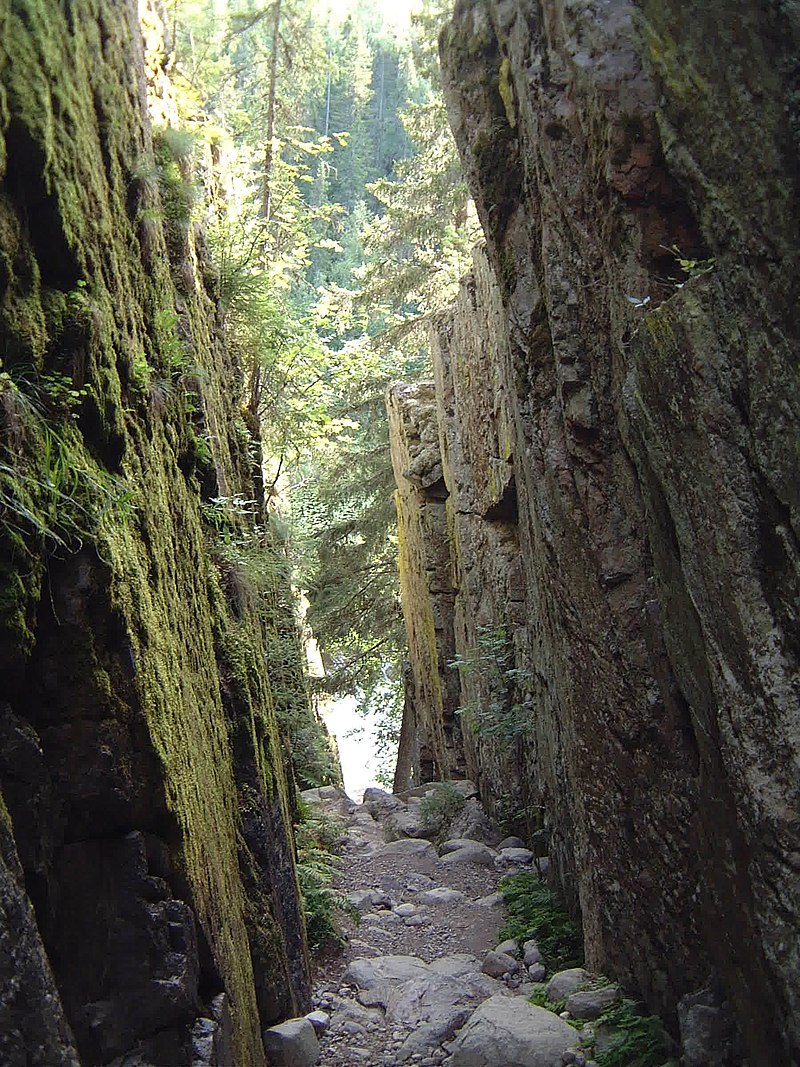
Anyway, back to the Finnish Pavilion which is called "Helvetinkolu", a"Gorge of Hell". It's situated on Calle Marie Curie, 1 and can be viewed through the gates. It's still in use, namely by the Foundation for Research and Promotion of Architecture. The name of the building, I suppose, is a reference to a gorge in Finland with the same name. The geological features of this area were created millions of years ago (pic below right), says the web.


The building is pretty cool, its combo of rusting steel and natural wood has weathered well its time. On wikipedia it says that the Finnish Pavilion is divided into two buildings, called "keel" (wooden: a reference to the nature and tradition) and "machine" (steel, glass, black: represent industrialisation and modernity), leaving between them a narrow open space of only two meters wide, kind of a gorge. 

The cool thing about the wooden structure is that it is supposedly made of Finnish pine and its artisan execution follows the principles of shipbuilding.

I also found out that one of the architects is still in practice and works with pretty interesting looking wooden structures. There is a link under projects to the Finnish Pavilion. The designers and architects were young architect students; Juha Jääskeläinen, Juha Kaakko, Petri Rouhiainen, Matti Sanaksenaho and Jari Tirkkonen, they are also interviewed at the news clip.

Last, worth watching is this promotional documentary from the Expo site, it's crazy to see how it actually looked like back then....


Saturday, February 13, 2016

My detective work on a Triana flamenco joint

Everybody who ever visited Seville knows that Triana is the home of flamenco with its own flare. Living in Triana is pretty special. I love observing the life here. So here's what I found out about the Flamenco joint next door on the legendary Calle Pureza.

On the walls, there are big, almost life size, paintings of a flamenco dancer at her mature age. She's really stunning with her facial expressions, so much so that it rattles the earth below you. Until not so long, I had no idea that they were actual pictures of a real dancer, a pretty famous one.

Her name is Manuela Carrasco (in the pic), and of course she's born in Triana. Here's her history on wikipedia, she, for example, performed in Carlos Saura's both flamenco films.

I saw her performance in the Bienal de Flamenco in 2014. Even more impressive than her dance was the anticipation and feeling in the Real Maestranza when she performed, she's really loved here. Check the review of that performance, it gives you a taste of it. I've seen her a few times in the joint too, having a drink, but I've never seen her dance there.

I found out about her identity once talking to the owner of the joint. It took me many times of going there before he warmed up a bit for a chat. Actually, I think he only wanted to talk to my friend, but hey, we got interesting stuff out!

He turns out to be Joaquín Amador, Manuela's husband and her long time guitar player. Apparently, they played and performed a lot together in their early days in the 1980's (an old clip of them performing). My friend and I were exited to hear that he's guitarist, but he was quick to say that he never plays in his own joint, somehow insinuating that it's way below he's class. So I had to dig out some early recordings of his playing on YouTube, and I found out that he's the brother of the famous flamenco singer called La Susi! See a clip from the old age of him playing with his sister La Susi.


So if the owner does not play in his own flamenco joint, who does? Well, once, I was there with another friend listening to a young flamenco singer with a honey-smoky voice, like I call her, my friend noted the resemblance between the singer and the pictures on the walls. At that time, I didn't know that the pictures were of Manuela Carrasco, so I kinda passed on her comment.

Later, though, I realised that my honey-smoky singer is the daughter of Manuela Carrasco and Joaquín Amador. Her name is Zamara Carrasco. She sings also with the group called La puro mando, but I think her voice works better in a small bar than on the big stage, where she seems to be forcing it a bit too much. This tv documentary of her is done already some years ago, but that's how l love to see her singing.

And - to finally to answer to the question: who plays the guitar? It's Zamara Carrasco's husband! He's pretty kick-ass too, I really like to listen to him, you can see him in this video. The only thing is that you never know when they play…. The joints opens close to the mid-night, he's working behind the bar and serving drinks, and you might end up waiting for an hour before anything happens. Or sometimes nothing happens... We actually almost never go there anymore, as something has changed and things don't seem to run in the same old manner anymore. But if you are nearby, it might be worth the visit!

Saturday, November 23, 2013

A great talk about simple laws that govern growth

I especially like the part starting at 9.3 min. where he talks about how cities are network:
"cities are network and the most important network of cities is you. Cities are just a physical manifestation of your interactions, our interactions, and the clustering and grouping of individuals"
However, a word of warning: read the comments and the critical discussion! 
"Physicist Geoffrey West has found that simple, mathematical laws govern the properties of cities -- that wealth, crime rate, walking speed and many other aspects of a city can be deduced from a single number: the city's population. In this mind-bending talk from TEDGlobal he shows how it works and how similar laws hold for organisms and corporations.

Physicist Geoffrey West believes that complex systems from organisms to cities are in many ways governed by simple laws -- laws that can be discovered and analyzed."


Tuesday, November 22, 2011

A day in 2061 - TEDxBrussels

What a day in TEDxBrussels- 35 speakers of a huge variety talking about the deep future, namely what will it be like in 2061.

Very inspiring, but requires lots of thinking and making connections between things that did not exist before or did not click together before (e.g. much talk about singularity, so I really had to re-fresh my memories about Kurtzweil's book, a good thing that Matt was there to help me!).

Here is my top talks:
  • Leila Janah Absolutely the best "TEDTalk" of the day, just like what you would expect. She's smart, has a dream, then a vision and an idea, and able to make things happen. This talk was actually very inspiring for me, I really dig her idea and the fact that she was able to make it happen (and make it to TEDxTalks :)
  • Peter Hinssen This guy had a challenge to be the 34th speaker of the day - boy, we were pretty tired at that point! He was good and able to energise us - and he talked about health care (about the most boring topic on my list). Regardless, he made it interesting and he made strong statements, like that he's the S-curve guy (as opposed to exponential curve, which was the underlying message of the remaining 30 talks).
  • Rudy Rucker (video not yet online when I posted, must be coming soon) I like some of the science fiction just because it's so freaking innovative and mind-blowing. So this sweet looking, gray-haired dude turns out to be one of the early CyberPunks - and he is still totally out there! Check his predictions for year 3000 - we no longer produce things, we grow them.
  • Rob Spence One particular thing about TEDTalks is that they are always sooo personal. They always tell something touchy about themselves, which after a few rounds gets pretty boring. Not so with this guy. After loosing his eye, he now replaced it with a video camera and he's talk is about pimping up humans with machines (the cyborg stuff) - really cool.
  • Andrew Hassel A talk about science and biology in 2061. Very well composed and making a point about open science.
  • Eileen Bartholomew Her talk is informative if you are interested in snooping out what the next X PRIZE challenge might be.
Probably any of the other videos are also worth of your 8 or 18 minutes. Some of the space travel stuff was fascinating too.

Monday, February 08, 2010

Is eTwinning socially contagious?

Last weekend I joined more than 500 eTwinners (www.etwinning.net) in the 5th annual conference that took place in Sevilla. Quite a fiesta! I co-ran 3 workshops which all had something to do with social networks, more or less. I jokingly tell teachers that I'd like them all get an eTwinning virus and spread it around when they go home. This "virus" is, of course, a good one (e.g. innovative use of web in ed.context) and it spreads through the social network that teachers have created by being part of eTwinning. From where my question: is, or can, eTwinning be socially contagious?

Often times nowadays when people talk about social networks, they actually talk about social media tools or web 2.0 stuff, where it is made easy to express your social ties and make them visible to others (can I friend you?). Underneath all that "stuff" lies the structure of the social network which is of interest to me. I consider a network
as a conduit for the propagation of information or the exertion of influence, and an individual's place in the overall pattern of relations determines what information that person has access to or, correspondingly, whom he or she is in a position to influence. A person's social role therefore depends not only on the groups to which he or she belongs but also on his or her position within those groups. (Watts, 2003, p. 48)

Moreover, Watts goes on to explain yet a different way to view the network, namely through weak ties, "which can be thought of as a link between individual- and group-level analysis in that they are created by individuals, but their presence affects the status and performance not just of the individual who "own" them but of the entire group to which they belong." - and this all leads to the new science of networks.

Duncan Watts's book Six Degrees (2003) is one of my favourite science-tainment (like edutainment) book. I always enjoy picking it up and re-reading it, I seem to understand some of the passages in a new light. Today I re-read the stuff about differences of spreading a virus and "social contagion", like a fab that spreads or cascades throughout the whole social network.

There are some similarities, like the fact that each individual has a different threshold (some get the virus easier than others) and that you have people around to spread it to ("to whom she or he pays attention to"). But "social contagion", unlike biological one, does not take place if the network is too well connected!
So when everyone is paying attention to many others, no single innovator, acting alone, can activate any one of them. ... In social contagion, remember, it is the relative number of "infected" versus "uninfected" - active versus inactive - neighbors that matter. (Watts, 2003, p. 240)

Studying fabs or innovations (e.g. the use of web in ed.context), the question is about the moment when the fab stops being a niche thing among early adapters and when it leaps to the larger general population. I too often have a feeling that eTwinning "preaches to the converted". So, I'm keen on understanding how eTwinning can step out of being a nice of early adapters and get the others "contaminated". Someone aired a good comment in the conference, we should not take eTwinners as a representative sample of educational community in general.

Step one: who is infected?


I ran a few analysis to get a better picture. It's hard to find the number of schools or teachers in all eTwinning countries. After some digging I found OECD's Stat extracts which has lots of good data, and was able to find the number of teaching staff for 23 out of 32 countries (close to OECD's definition for EU19). I think that's a pretty good proxy to go by, however, not sure how accurately our data aligns with them. I used the date as described in the image for 2007.

The data says there was 6 210 411.57 teachers (I love the 0.57 teacher!) working in those countries, out of which 76 367 have registered in eTwinning by this date. On average, each country has 1.83% of their teachers infected by the "eTwinning virus", median was 1.42%. The countries above median in descending order are: Estonia, Iceland, Slovak Republic, Czech Republic, Slovenia, Finland, Greece, Poland (still above average, too!), Spain, Luxembourg, Portugal and Sweden. Are you surprised? I am a bit...

The countries below median were: the United Kingdom, Turkey, Norway, Netherlands, Italy, Ireland, Hungary, Germany, France, Belgium and Austria.

Well, my question is not about the success of eTwinning initiative itself, but it's more about understanding what are the conditions (globally and locally), what are the individual thresholds and when can we expect the cascading effect to take place (it's all about one or more vulnerable neighbors who have one or more vulnerable neighbors who have...).

These are typical questions that people interested in the new science of networks ask, and I want to know more how it happens within educational context. I think eTwinning is a good virus to study that!

We've just stated the TeLLNet project with some top-notch partners, so I'm looking forward to dwell into this problematic later again!

Thursday, October 01, 2009

Educational take - danah boyd: American Teens & Social Media

danah boyd has put something really important in words in this little video, it's related to the use of social media (applicable to all ICTs and mobile technologies) in education. If in a hurry, fast-forward to about 5.30 of the video:

Teens need to know boundaries, norms and how society works, and this should be taught through using social media, i.e. the tools that they use anyway .
The reason that "because kids are doing it" it not a good reason to start teaching about social media in schools. "Pedagogy and understanding of the tools, are two key pieces of knowledge that teachers must have before entertaining the idea of bringing social media into the classroom. Information sharing is relevant to education..."


A valid point made for teachers continuous professional development!

Saturday, September 26, 2009

Impact of ICT use on educational performance

The question the top-dog politicians nowadays ask is the impact of ICT on educational performance. Especially in the school sector, this has been the trendy question since a few years, when the policy makers realised that they want to see some return on their investment (i.e. all the hardware put in schools). My favourite EUN report on recent research is The ICT Impact Report (01/2007).

This week at the OECD's New Millennium Learner conference South-Koreans presented another interesting study towards this direction. Prof. Heo's presentation is available here, check the pages from 20 onwards for the results. The study included 10% of the 10th graders in South-Korea (1071 students, random sampling). The design of the study looked at the use of ICT
  • Place: in-school and out-of-school use of ICT
  • Purpose: learning vs. entertainment use of ICT
  • Context: individual use vs. social use of ICT
Educational performance was divided into:
  • Cognitive domain
  • Affective domain
  • Socio-cultural domain
Significant impact was found on educational performance with:
  • Out-of school ICT use
  • ICT use for learning
  • ICT use in individual context
Note, in-school use did not yield any significant impact :/ More interestingly, out-of-school use of ICT for learning purposes had a positive correlation (r=0.520, p= 0.00) with cognitive domain of educational performance, which shows good news for informal context of learning.

Sunday, July 19, 2009

Social media: narcissism, ADHA, stalking

This is a pretty accurate depiction of the what goes on with the users of social media. It makes a good-looking t-shirt!

Friday, July 17, 2009

Personalisation vs. Social

I've been thinking of this personalisation-thing a lot lately. I quite cannot get my head around it, so this blog post is just to mull over the ideas.

By personalisation it is meant that, for example on a learning resource portal, the offer is tailor made for one of the users of the system. There are three commonly known ways of doing this:
  1. Based on self-proclaimed profile (e.g. you say you teach math, so your services are personlised towards math)
  2. Based on collaborative filtering e.g. ratings (like-minded users, ppl who agree in the past tend to agree in the future) or content-based filtering
  3. Based on behaviour (e.g. other teachers who used this resource, also used xx)
In the cases 1 and 2, the idea is that there is a profile for you, whereas no: 3 can be used for any user (e.g. this is what Amazon does for any user regardless if they are logged in or not). With the first two cases, we can state that this type of personalisation is often cumbersome and labour-intensive, the problem is how to get that information from users (which creates cold start problem for users, and is also related to cold start problem of resources).

Also, not all the users are always interested in doing the work of filling in a profile or rating resources. In one of my studies (Vuorikari, Sillaots, Panzavolta, Koper, 2009) we found very different types of users behaviour, in this case related to how ppl tag (which could be also used for collaborative filtering).

About 33% of ppl tagged content (the arrows going away from the user group in the image), 32% used tags for searching but did not tag themselves (the arrows going towards a user), whereas 35% of ppl did not tag nor used tags at all (in the image the arrow going from LOM towards the group indicating that they used LOM based search methods only).

In this case, I'm interested in the 32% group, who clearly got benefit from tagging that other folks did, but did not do any work themselves (kinda freeriders, if you wish, but I don't mean to be negative).

If we were to use the tagging and bookmarking information to construct a user profile of the users and further use it for personalisation (no: 1 and 2 in the list above), we would be only able to do it for the group of taggers, i.e. 33%. The benefits could only be reaped by that group too, since for the rest of them, we have no profiling information to be used for personalisation.

However, a social tagging system is more about creating "personalisation" for all the users of the system, regardless if we know anything about them and they are willing to put in the time to create a profile and feed it in. It's about making social navigation trails visible to every user of the system, instead of going for "personalisation".

What I think is really cool is that we've shown that we more than doubled the amount of ppl who took advantage of contributions, i.e. from 27% who tag and use tags for navigation to 59% (that is adding the group of 32% who use tags but don't tag).

My assumption is that the rest would not even care about recommendations, etc., as they seem to formulate their searches in a rather acknowledgble way (40% formulate advanced searches; 38% only browse categories and 30% do both).

---------------------------------------------------
Some other thoughts about personalisation:

  • There are things that I dig, like Amazon, when it tells me "ppl who bought this book also bought xx". Thing thing is, though, that is the stuff that generally makes any user's life better on Amazon. It is not that they personalise the thing for me only, the unique Riina, the one and only, but it is something that makes any users experience on Amazon better.

  • the problem with personalisation often is that there needs to be a detailed profile of you that is based on detailed user model that is based on some abstract model that some obscure committee came out with in the 70's. Ok, that's maybe a bit exaggerated, but you get the point - there is a model where you are fitted.

  • What if I don't want to be personalised? What if I want to do the same thing as my buddies do; listen to same music as they do, study the same stuff as they do and go shopping with them? I want to share my life and experiences with other people around me because, guess what, through that type of sharing and doing stuff together, I feel related to them, I have things to talk with them and we form a community together. And it is really important for me to be part of that community, because it's part of who I am and helps me to reflect on what's out there.

  • Is peronalisation really personalised? It's not actually. By making things personalised to me, what is actually happening is "un-personlisation" of me. My taste is guided to the direction of all the other users, so I am actually being socialised! My personal music recommendations are actually very similar to other listeners, and eventually, it's all going to be the same taste!! Of course, unless there is randomness which offers serendipity.

  • Lately with all these micro-messaging things where ppl post their "mood" or what they are doing online ( e.g. I should be tweeting right now: "I'm writing a blog post" and simultaneously have it up on my Facebook), it's kinda funny that they feel this urge to yell out to all what they are doing in their über-personlised world.

Wednesday, July 15, 2009

Palm Pre - I wonder when it might come to Europe?

Already for a long time I've been ready to say goodbye for Nokia. This is a big statement from someone from Finland whose grown up with Nokia. Mind you, when you kid/growing up you wear Nokia rubber boots. Your bike tires are Nokia. I bet at one point there was also toilet paper that they produced, among other things like cable and TVs. And then - the first kännys, the mobile phones in early 90' (Btw, they were not called gsms back in the day, as we used anotehr standard called NMT with much better coverage in vaste areas like in Lapland).

So, my whole active mobile phone user time (which in my case started already in early 80's, dad had a mobile phone in the car which we used to tell mom to turn on sauna when returning from summer house. You actually had to go by a dispatcher and push to talk!) I've stayed fidel to Nokia, and mostly Communicator, which I have had since '03 or something (when they came up with the 2 model).

Anyway, everything turned sour with the last Communicator that I had (E something). They've cut down the awsome shortcuts that used to be there and everything became too heavey and hard to use. Also, the size did not get any smaller. But I did not want to buy an iPhone either, I think no cool kids use iPhone. All the other phones are infested with all Microsoft this and that from which I prefer to shun away. So when I heard about Pre Palm, I took a look at it with no presumptions of the past (I used to hate palms and despite ppl who choose to use such an inferior technology - go and figure)

I so want it, this review is really good. I wonder if I have to wait until they come to Europe or can I buy it from the US? Well, actually just checked on it, by Christmas - geee, that's some waiting.

Google parsing microformat, e.g. ratings

In May Google announced that they will start parsing microformats (on a small scale first), similar stuff came out from Yahoo! last year, but even on a smaller scale.

This is pretty huge for the end-user generated ratings! I must say that I did not see it coming in this way, which makes it even more exiting :)

..Google is releasing support for parsing and display of microformat data in their search results. .. anyone who marks their pages up with the appropriate microformat data will be able to make their information understandable by Google. This technology would allow you to explicitly search, for example, for only printers that had an average customer review of 3 stars or higher.

Holy smokes! This is cool, can't wait to see when it will first pop up in my search :)

So, since a long time it's been problematic to get enough ratings on items, this is a known problem especially in the field of Recommender systems. They talk about "sparse data". An example, you want to make a recommendation on music, but the item x has 3 ratings, item y 2 ratings, etc. This is way too little to be used to create recommendations using the algorithms that are out there. Take another example, a camera shop, they let users rate their cameras, but they get very little reviews from users.

Now, however, there are other camera shops who are struggling with the same problem. Essentially, they all are selling the same camera brands, and they all have only a few ratings on it, and at the end, non of them can do much fun with this small amount of rather anecdotal information.

There has been talk about a unique identifier set by industry, for example, so that all camera sellers could use them and thus aggregate all the reviews and ratings together. Yep, you guessed it, there's maybe that one shop down the blog who does not want to use it. I think a couple of years back Yahoo! came up with a very compelling paper reiterating the idea and trying to muster up enough consensus among industry and other players. Not much happened - and then, here is Google and microformats... beautiful :)

Why I'm interested in this is that with the idea of federating learning resource metadata across repositories, we face the same problem. As a result of sharing metadata, the same resource might end up used in many different repositories, where users might be allowed to rate them. But that metadata on ratings or evaluations is VERY seldom shipped back to the mother board.

The same with tags and bookmarking (other other tools that allow users to create collections or playlists). That could be valuable information for the repository who first federated the resource metadata out. By collecting back the varied annotations from different repositories, they could gain interesting information, and eventually overpass the sparse data problem. Moreover, they would gain data about what works and in which context, which makes me think of "travel well" resources.

In action

Here is an example of a search for Palm's new phone that I'm contemplating on. I search for reviews only and the result list shows the ratings, but I cannot yet make a query saying "palm pre" ratings grater than 3. Nice in any case.


I've had a few ideas on this with some colleagues and I really look forward to seeing what Google comes up with that. And how are they going to solve the issue of different rating scales used, and multi-attribute ratings.

Vuorikari, R., Manouselis, N., & Duval, E. (2007). Metadata for social recommendations: storing, sharing and reusing evaluations of learning resources. In D. H. Goh & S. Foo (Eds.), Social Information Retrieval Systems: Emerging Technologies and Applications for Searching the Web Effectively (pp. 87-107). Hershey, PA: Idea Group Inc. Retrieved from http://elgg.ou.nl/rvu/files/20/144/SIR_vuorikari_manouselis_duval_web.pdf.


Manouselis, N., & Vuorikari, R. (2009). What if annotations were reusable: a preliminary discussion. In M. Spaniol (Ed.), Advances in Web-Based Learning - ICWL 2009, Lecture Notes in Computer Science (Vol. 5686, pp. 255–264). Berlin Heidelberg: Springer-Verlag.

Monday, June 15, 2009

Testing LeMill for embedding content

LeMill is one of my favourite tools to create online material. It's so simple and easy to use. What I like a lot is that they always follow their time, like here I'm testing how the embedding of my content happens in another platform.

Here is one "Collection" that I've created called "hansin kamaa" = stuff from Hans. It includes two different pieces of content. Apart from exporting the content as a zip-file, I can now also just embed it somewhere, for example in my blog. Pretty neat - and useful!


Testing something else here:

Monday, May 04, 2009

Link structure and anchor text

I read that Brin & Page (1998) paper again. A few guidelines to keep in mind:
..our notion of "relevant" to only include the very best documents since there may be tens of thousands of slightly relevant documents. This very high precision is important even at the expense of recall (the total number of relevant documents the system is able to return).


Two features to produce high quality precision:
  • Link structure is used to create objective measure of its citation importance that corresponds well with people’s subjective idea of importance. Well, it's that simple..

  • Anchor text:
    ..anchors often provide more accurate descriptions of web pages than the pages themselves. Second, anchors may exist for documents which cannot be indexed by a text-based search engine, such as images, programs,..
The point about the anchor text is so interesting, I wonder how well does it apply to tags? I bet really well..

I also found this interesting: "it has location information for all hits and so it makes extensive use of proximity in search"

Differences Between the Web and Well Controlled Collections
  • extreme variation internal to the documents: documents differ internally in their language (both human and programming), vocabulary (email addresses, links, zip codes, phone numbers, product numbers), type or format (text, HTML, PDF, images, sounds), and may even be machine generated (log files or out putfrom a database).
  • external meta information as information that can be inferred about a document, but is not contained within it. Examples of external meta information include things like reputation of the source, update frequency, quality, popularity or usage, and citations. Not only are the possible sources of external meta information varied, but the things that are being measuredvary many orders of magnitude as well.


http://www.scribd.com/doc/3208417/The-Anatomy-of-a-LargeScale-Hypertextual-Web-Search-Engine

Thursday, April 02, 2009

A touch screen for schools for less than 50€

I love the do-it-yourself attitude of some e-learning tech support guys! Marko Puusaar just showed to us here in the e-university conference what he hacked together based on http://johnnylee.net/projects/wii.

In the picture you can see the touch screen for less than 50€. It took him about 15min, and that is with all the explanations of parts included!!


The pieces needed are: a Wii remote control, which will work through blue-tooth with your computer, a bit of software (there are pay versions, or free ones for educational use), and a Infra-red pen, which he did himself to look like a normal pen.


Saturday, January 10, 2009

Where does a CC-licence take you?

..or better, your photos? Some time ago one of my pics was "selected" for a travel guide from Prague. That was pretty cool and I really appreciated it. Tonight, I was checking my Flickr stats and noticed that one photo had been viewed many times recently. So I looked what's up with that.


I followed the referrals. Here are the top 3 sources, some other hits were through search engines for generic keywords like ski, etc.

1. It was the main picture on the Facebook group for Sankt-Anton fans.


2. It was on a Yahoo! travel website for best skiing in America. They had a Flickr badge with some random ski shots, et voila moi! (see the small image on the right corner)


3. The funniest of all, though, is that it is one some German photo website where the dude discussed how the picture should have been framed differently! Hmm..I think my boyfriend, who took the picture, did not appreciate this lesson..


It's just kinda weird to find yourself in odd places on the web, but hey, isn't that what the creative commons license is supposed to allow. So this is just one consequence of it, I guess.

Talking about odd places to be on the Web, the other night my Google alerts had picked up that my blog post appeared on a porno site. Sure enough, there after lots of photos of youknowwhat, were feeds from my latest blog post. Pretty hilarious... I don't recommend clicking on the link, but you can read the paper though!

Friday, September 19, 2008

Encourage lurking in conferences!

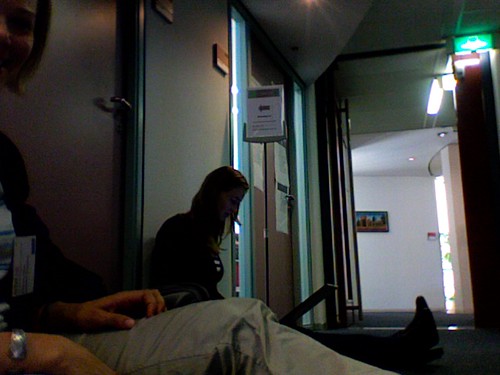
I'm always amazed how old-school these conferences are. I'm currently in Ec-Tel 08, sitting outside of the session room on the floor and listening the speech through the half-open door. I'm a lurker.
lurking in ectel08
I do not want to participate in the whole session, but I do want to lurk around because I'm half interested and there is one speaker that I want to see later. I just don't want to sit in the room and tap on my laptop.

It would be great to have a couch or a few seats outside of a session room with a screen, and hopefully also audio, to be able to properly lurk. We already know from online communities that it is totally OK to lurk, so why would we not make it also properly available in the conferences, too?

I've had really interesting conversations in these marginal places of conferences. Let's just make them happen more often! Let's provide places to officially lurk around.

Friday, September 12, 2008

Cross-boundary ranking of learning resources

Based on the idea of Interest Indicators, like social bookmarks and ratings, I've looked at the data so that we can make the cross-boundary resources better available on the MELT portal.
The aim is that we can, based on previous users' behaviour :

a) make separate "travel well" lists of resources that have a potential to cross-borders better,

b) use this information to rank resources better in the normal search result list,

c) allow users search for resources that have a good "travel well" value (e.g. give me resources in math that can cross-borders)

This is the data that I'm using (table below) and this is how I've defined cross-boundary (e.g. cross-country and language) learning resources before. Using that definition I have manually verified the number of cross-country resources. In the dataset, about 82% of resources were cross-country.


Now, we have a problem, though. On our MELT portal we do not have information about the country where the resource originates from. Dah!

This is a big blunder (in my opinion) in our Application Profile, we have not defined the country where the resource originates. We do define the provider, and the country information could be inferred from the provider, but it does not always work.

For example, one of our providers has frequently metadata about resources that do not originate from the same country!

I've experimented with the data using the information that we have on the portal, which is LOM about the resource including the language of the resource. As we also know the mother tongue of the registered users, this gives us a kick.

In the table below we can see the coverage of cross-boundary actions that we can get on resources without using any manual labour or verification of the country or language. As a base-line, with manual verification I found that 82% of the actions concerned cross-border rating or bookmarking of a resource.


The first row represents the cross-language resources (i.e. user's mother tongue is different from the resource language). Just using this information, we get about 65% of resources right, as opposed using manual checking (82%). I think it's pretty good, I'd settle for that! (although I have to look what kind of material was left out!)

The two other comparisons in the table are based only using information about users' previous behaviour. These would be:
  • rating > 2
  • bookmark
Only using information regarding bookmarked and rated resources results in a lousy coverage of around 20%. The problem is that 25% of resources bookmarked or rated are on more than one resource, the data still is very sparse.

Anyway, I want to use that information to "cross-boundary rank" the resources. As we do not know the country where the resource comes from, my work-around is based on countries where these users come from.

Here is a visualisation about resources that have been bookmarked or rated by users (see also ManyEyes link below). We can see the orange node in the middle, a learning resource called "Five Days in New York..". We see 3 edges leading out to Finland, Belgium and Hungary. This means at least one user from each of these countries has bookmarked the resource!

So, even if we do not know the origin of the resource, we know that it has users from 3 different countries. I can infer that it is a cross-boundary resource.

As most likely one of these 3 users come from the same country than the resource comes from, I will minus one country out of the total of countries: (number of countries -1)

My cross-boundary rank will be the following:
  • Count the number of ratings grater than 2 and/or bookmarks for a resource (actions). Give each action one point
  • Count the number of these users and give each user one point
  • Count the number of user countries of origin. Give each country one point and then minus 1
  • Compare the mother tongue of each of these users to the language of resource. If they differ, give one point/mismatch.
Then, count the following:
number of users + number of actions + number of cross-language x (number of countries -1)
Let's take the above resource "Five Days in New York.." as an example
  • Count the number of ratings grater than 2 (3) and/or bookmarks for a resource (5). Give each action one point. (8)
  • Count the number of these users and give each user one point (5)
  • Count the number of user countries of origin (Hungary, Finland, Belgium). Give each country one point and then minus 1 ( 3-1=2)
  • Count the number of user mother tongue (hu, nl, fi). Compare the mother tongue of each of these users to the language of resource (en). If they differ, give one point/mismatch (3).

  • number of users (5) + number of actions (8) + number of cross-language (3) x (number of countries -1) (2) = 32 Travel well value
This way you can count a value of "travel well" for each resource that users have previously interacted with on the portal. The value will always be an integer, which is important from the technical implementation point of view (in Lucine index it apparently needs to be an integer).

The down side is that we'll have a huge cold-start problem. As I said, our data is very sparse. To seed the system, I actually still manually check the new resources that users have interacted with and make a fake bookmark on them so that it looks like it has at least two users from 2 different countries. This way the resource gets a "travel well" value counted and appears on the "travel well" list and is better ranked, etc.

Of course, at the end I will evaluate how this treatment affects on users, do we, for example, see a big amount of bookmarks on these resources that I have been able to count a travel well value?

You can see a visualisation here. This is based on on user's country of origin.